Why your pricing model is the most important financial decision you're not revisiting
I've spent 15 years in fintech, most of it scaling payments companies where margins are thin and every basis point matters. In that world, nobody charges a flat fee regardless of volume. Pricing tracks activity because it has to - the cost structure demands it. Miss that alignment early, and growth becomes your enemy rather than your friend.
So when I look at how most AI companies price today, I see the same structural mistake payments made a decade ago. And based on what I saw happen then, it's going to hurt.
Flat pricing on a variable cost structure is a trap
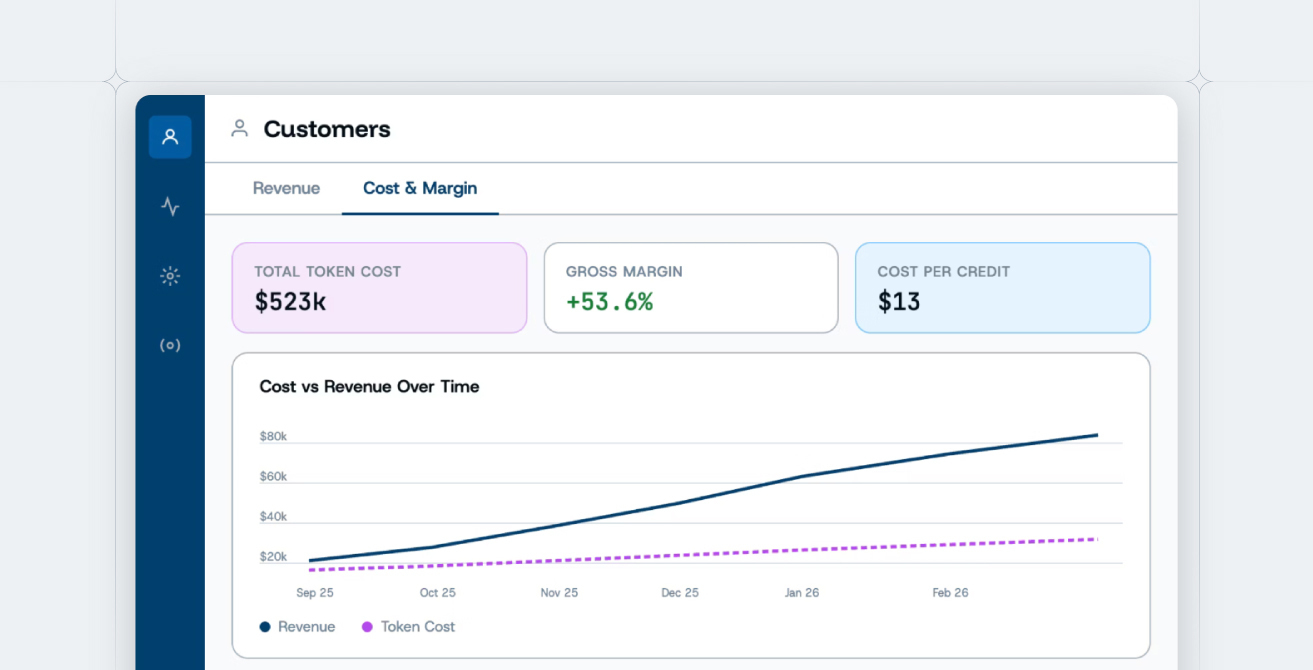
Most AI products are still sold as flat monthly subscriptions. But their cost structure behaves like infrastructure: every prompt, every workflow, every API call carries a real variable cost. When usage grows, so does the gap between what you charge and what you spend. More customers doesn't mean better margins, it means faster erosion.
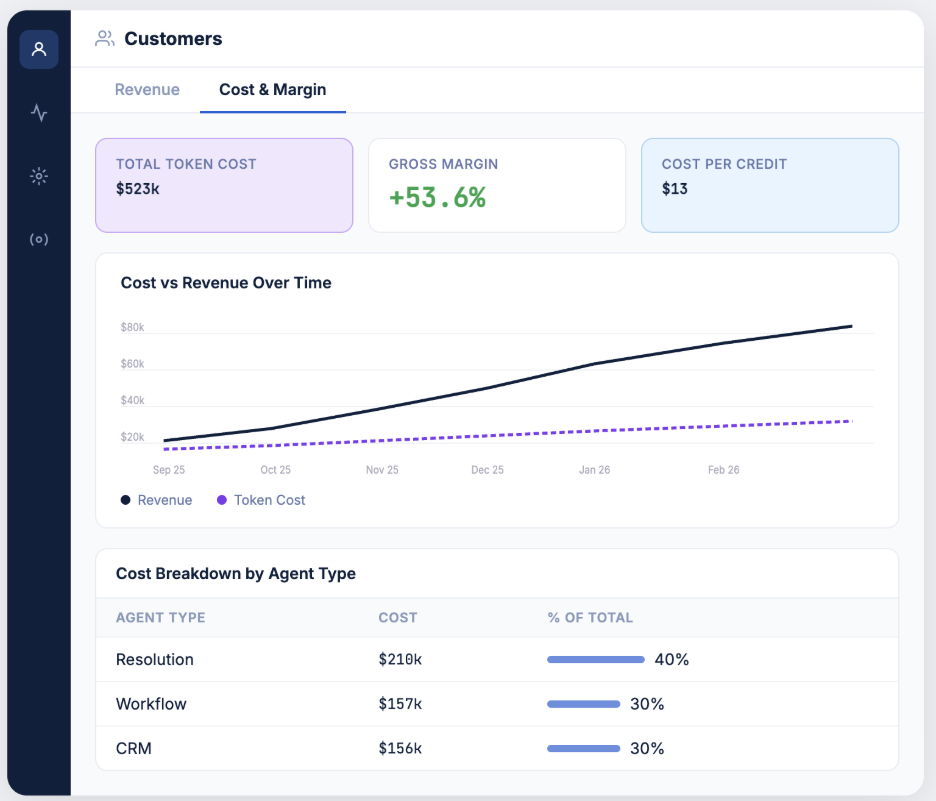
I've watched this play out in payments. Teams that didn't understand the true cost per transaction treated volume growth as a win, right up until the unit economics collapsed. The discipline required is the same: understand what it actually costs to deliver each action, and price accordingly. Blended margins and the assumption that model costs will eventually compress are not a financial strategy - they're a deferral of a problem that compounds over time.
The companies that get this right focus on the real margin per unit of AI-driven action being delivered today, not a future state. That requires pricing that reflects variable delivery costs, not one that papers over them.
The CFO blind spots that make this worse
Even experienced finance leaders routinely underestimate three things: how quickly discounting compounds into structural margin erosion, how much revenue leaks silently from "all-you-can-eat" plans that cross-subsidise heavy users, and how fast billing complexity becomes an operational tax as you scale.
Early on, pricing lives in a spreadsheet. Then you add tiers, usage metrics, partner arrangements, and enterprise discounts - and suddenly a meaningful slice of your finance function is dedicated to reconciling invoices and chasing billing errors rather than generating insight. That's not a billing operations problem. It's a strategic problem with a billing symptom, and it usually traces back to a pricing model that was never designed to scale.
A CFO also needs real-time visibility into what's actually happening: revenue recognition, consumption trends, and margin per customer, not a month-end report that surfaces problems three weeks too late. In payments, you live and die by real-time data. The same standard should apply to billing.
You don't need to blow up your existing model
The good news is that fixing this doesn't require a painful pricing overhaul or a disruptive "we've changed everything" announcement to customers. The most practical path for most SaaS and AI companies is to keep existing plan tiers exactly as they are, and layer AI-aware pricing on top - usage charges, outcome-based fees, or credit bundles that reflect real cost and real value without re-educating customers or rewriting the sales playbook.
This hybrid approach lets you move gradually, test what works with different customer segments, and measure the impact before committing to a full model change. The best companies treat pricing iteration the way they treat product development: test, learn, and adjust. The infrastructure just needs to support that flexibility.
That bridge from legacy billing practices to modern, usage-aware ones is exactly what we built Paygentic to be.
Real-time visibility into margin per customer, per workflow, per action. Pricing logic flexible enough to evolve alongside your product. And the operational infrastructure to make it all work without a dedicated reconciliation team quietly absorbing the complexity.
Pricing is finance. And right now, for most AI companies, it's the most important financial lever they haven't touched.
.png)