⚠️  High Fee Alert

You're losing over 0% to fees. International payments with currency conversion can cost over 5%!

Simple, 
transparent pricing.

No fixed fees. No surprises. 

Minimalist geometric design elements including diagonal stripes, starburst patterns, crosses, arrows, circles, and angular shapes in colorful arrangement

Billing

0.7%*

of volume

* If Paygentic is used for payments we do not charge for Billing

Bank payments

1.5%

of volume

Card payments

4.5%

of volume

Pay-as-you-Grow 
in action

No minimums. No lock-in.
Only pay for what you process.

  • Flexible pricing models: 
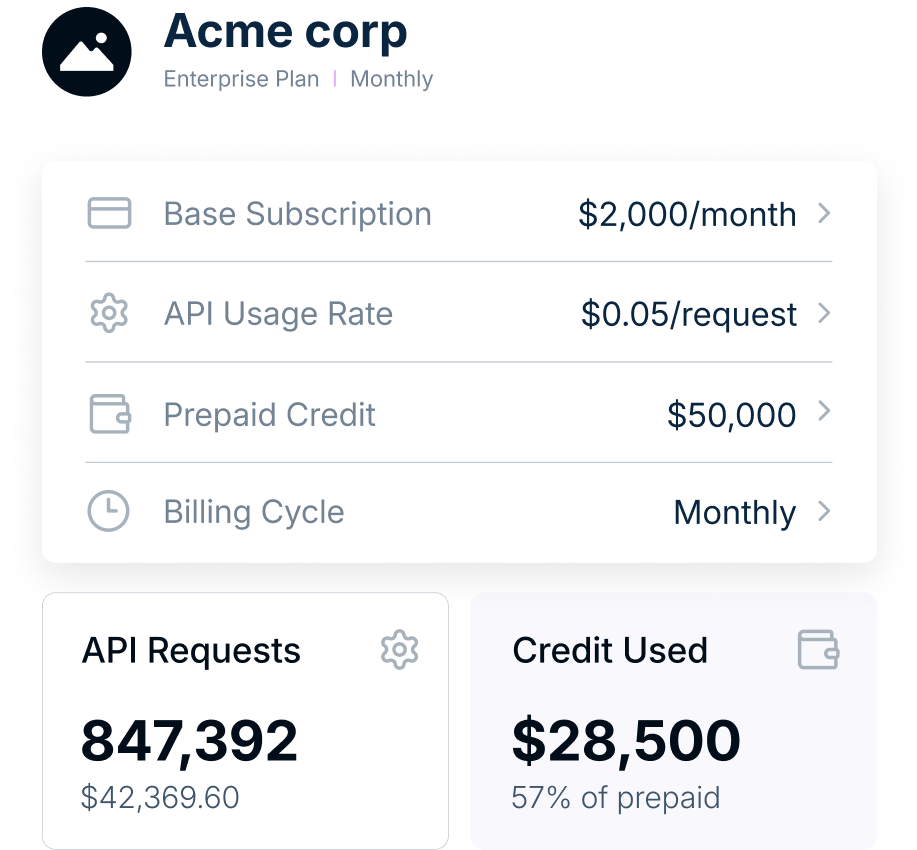
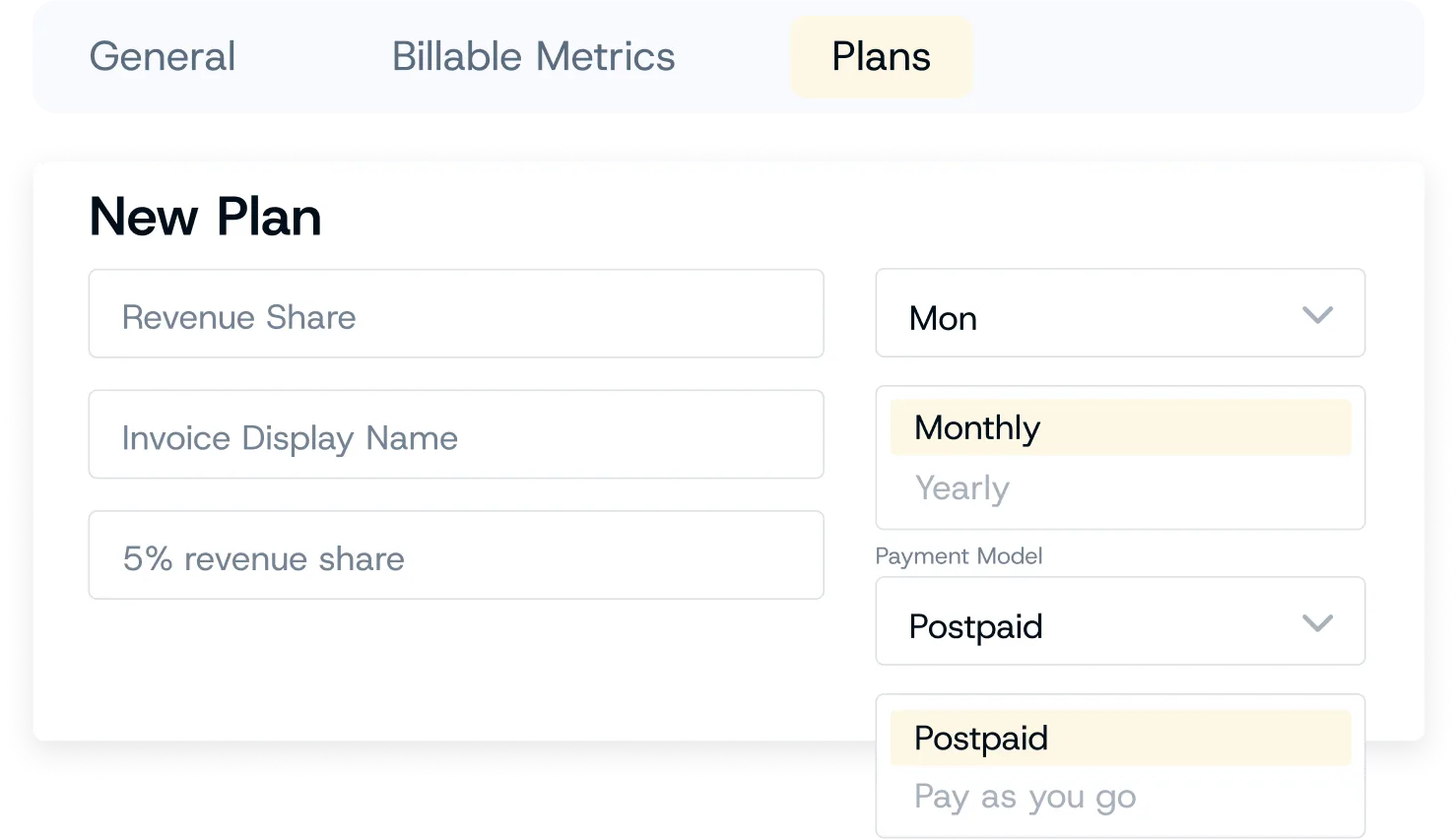
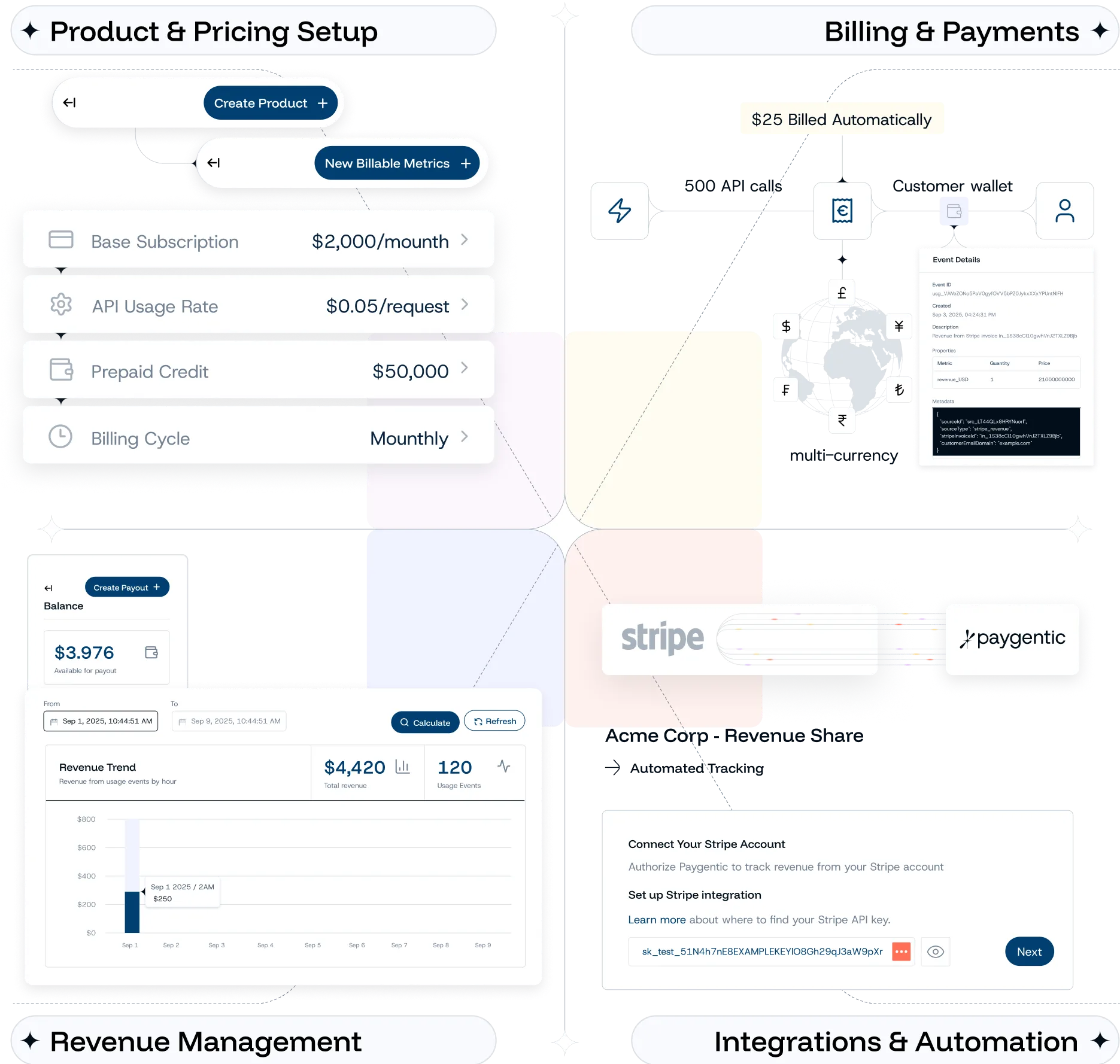
usage, outcome, hybrid, subscription, or revenue-share
  • Agent native platform
  • High-frequency, low-value transaction support
  • Fast setup
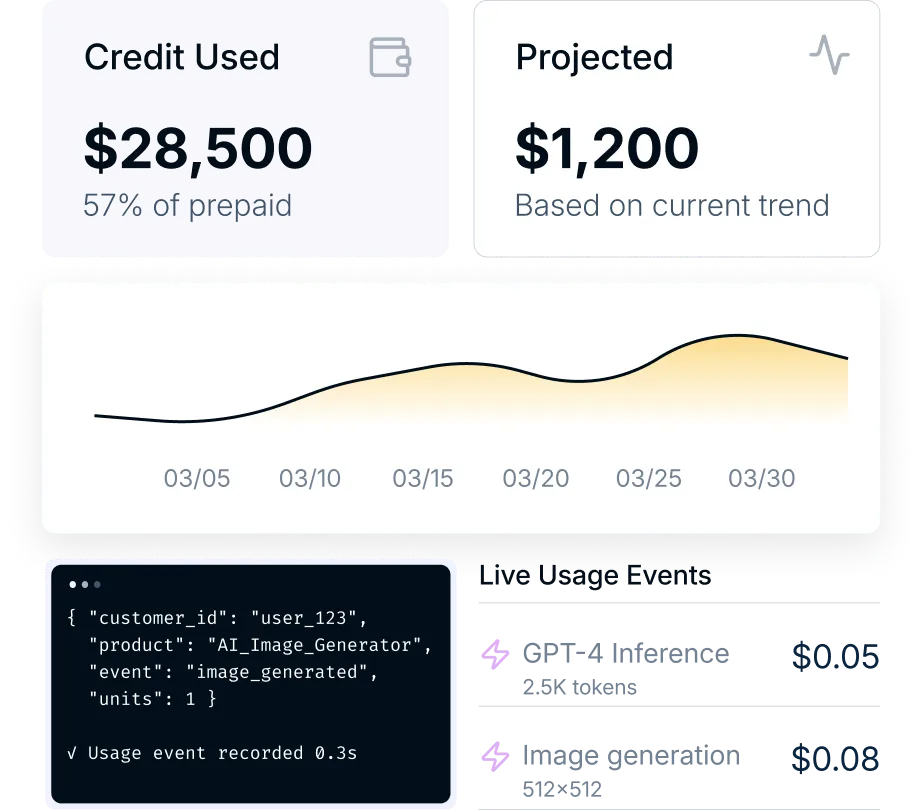
  • Intuitive dashboard & reporting

Stripe Fees Calculator

See how much Stripe's fees can impact your revenue

Transaction Details

Enter your transaction amount and select the payment method to see the fee breakdown

$

Stripe Fee Breakdown

Transaction Amount
$0
Card Processing Fees
-$0
Additional Fees
-$0
Total Fees
-$0
(0% effective rate)
You Receive
$0

Stripe Fee Impact Analysis

Domestic Cards (2.9% + $0.30):
-$0
International Cards (4.4% + $0.30):
-$0
Instant Bank Payments (2.6% + $0.30):
-$0
Billing (0.7%):
-$0
Taxes (0.5% + 0.5c)
-$0
Checkout (0.4% capped at $2)
-$0
Revenue Lost to Fees:
0%

💚 Switch to Paygentic & Save!

Lower rates, no fixed fees, no international charges

Stripe Fees
$0
Paygentic Fees
$0
Your Savings
$0
(0% less fees)

🎯 Paygentic Advantages:

✓ No fixed fees per transaction
✓ Free billing with payment processing
✓ No international transaction fees
✓ Lower bank payment fees (1.5% vs 2.6%)

Paygentic FAQs

Paygentic is the billing and payments infrastructure for AI products. It tracks billable actions, generates bills automatically, and collects payments so companies can run subscription, outcome-based, agent-based, usage-based, tiered usage, and hybrid models without per-transaction fees and legacy billing constraints quietly eroding margin.

Paygentic is for AI and SaaS companies that outgrow simple subscription billing, especially when pricing changes often, billing depends on usage, or money needs to be split and paid out to partners. It’s also a fit for finance and ops teams that need control without constant engineering support.

Most billing tools focus on charging customers based on subscriptions. Paygentic also supports subscription pricing but it is purpose-built for complex monetization workflows like usage-based pricing, revenue share, partner payouts, and reconciliation, where the hard part isn’t invoicing, it’s the rules, splits, adjustments, and operational accuracy.

Yes. Paygentic supports usage-based and hybrid pricing by turning product usage data into accurate billing, even when pricing changes over time. This makes it easier to launch new pricing experiments without rebuilding your billing logic each time.

Yes. Paygentic supports subscriptions, pure usage‑based, subscription‑plus‑usage hybrids, and outcome‑based models in the same stack, with configurable rules per product or customer segment. You can experiment with new models (for example, minimum commit plus success fee) without rebuilding billing logic every time.

Paygentic applies configurable revenue-share rules to real transaction and usage data, then automates the calculations, reporting, and payout workflows. This reduces disputes, manual checks, and month-end scramble, while keeping a clear audit trail of how each payout was determined.

Yes. By centralizing pricing and payout rules and automating calculations, Paygentic reduces the manual work where errors usually happen. It’s commonly used to replace spreadsheet-driven processes, improve auditability, and speed up month-end close.

Paygentic typically connects to your usage or event data, payment rails, and finance systems so monetization workflows run end-to-end without manual glue work. The goal is to work with what you already use, while replacing the brittle parts that require constant checking and rework.

Paygentic supports modern pricing models including usage-based pricing, subscription-plus-usage hybrids, tiered pricing, revenue share, and partner-based monetization or any combination of those. It’s designed for cases where billing depends on real-world product events, contract terms, or channel-specific logic.

Consider Paygentic when billing and pricing logic becomes difficult to operate reliably in production, especially if you support a combination of pricing models (subscriptions, usage-based, one-time charges, tiers, credits, or revenue share). Companies typically look at Paygentic when they’re spending too much engineering time maintaining billing logic, when adjustments and edge cases are creating errors or manual work, or when reconciliation and reporting across systems is becoming hard to trust.

Security and compliance are core to our infrastructure. Paygentic is built to adhere to industry-standard financial regulations and data protection laws. We are proud to have completed our SOC 2 Type II attestation, demonstrating our ongoing commitment to the highest levels of security, availability, and processing integrity. We utilize encryption for all data at rest and in transit, and we partner with regulated financial institutions to ensure that every movement of money is handled securely and compliantly.

No. One of Paygentic’s primary goals is to unblock Finance and Operations teams. Once the initial data integration is set up, non-technical team members can adjust pricing tiers, change revenue share percentages, and audit billing events directly through our dashboard without writing code or waiting for engineering sprints.

We understand that modern SaaS and AI platforms are global by default. Paygentic supports multi-currency billing and payouts, allowing you to charge customers in their local currency while managing FX conversions for partner payouts automatically. This removes the headache of manual currency reconciliation at the end of the month.

Real-world data is rarely perfect. Paygentic includes mediation layers that can flag anomalies, deduplicate events, and handle data gaps before they turn into incorrect bills. This ensures that you only bill for valid usage, preserving customer trust and reducing the volume of support tickets regarding billing disputes.

Implementation time varies based on the complexity of your current billing logic. However, because Paygentic is API-first and designed to sit alongside your existing stack (rather than requiring a "rip and replace" of your entire payment gateway), many customers can go live with their first new pricing workflow in a matter of days, not months. We offer dedicated onboarding support to ensure your data mapping is accurate from day one.

To get started with the Paygentic Platform APIs here or click here to see our user guides.

Yes. Paygentic gives you real‑time dashboards that show usage and revenue at the level of products, customers, and plans, so finance and product teams can see exactly how pricing is performing. These dashboards also surface anomalies and trends, helping you decide when to adjust pricing, introduce new plans, or intervene with specific customers.